
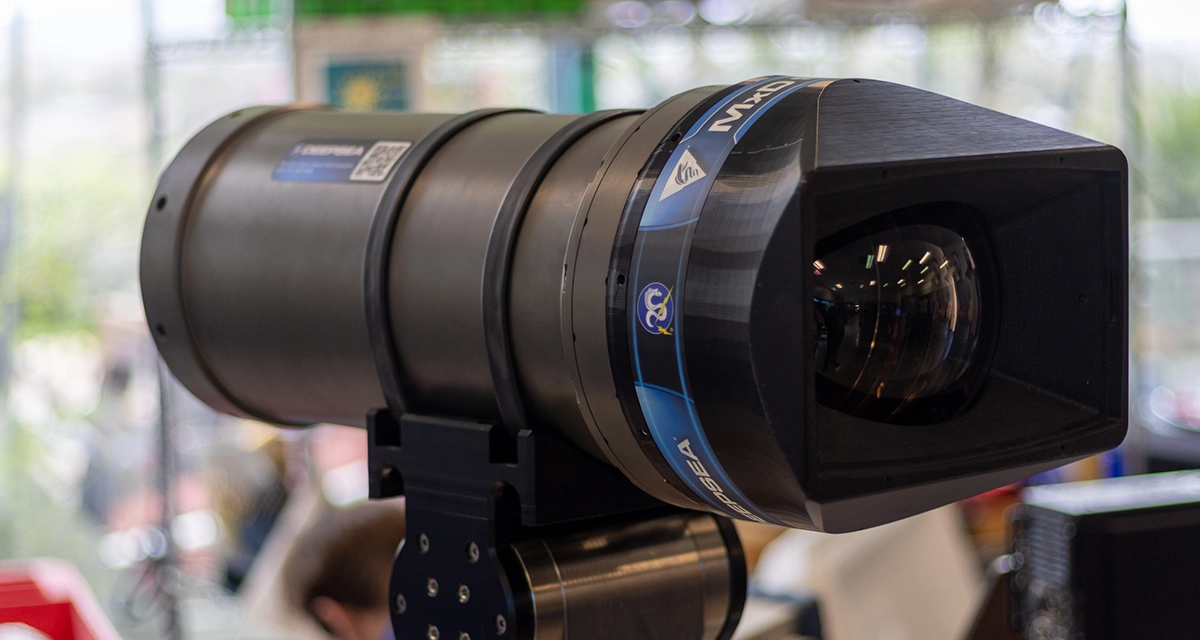
DeepSea’s latest oceanographic camera, the MxD SeaCam, was used in a sea trial aboard the E/V Nautilus during expedition NA176.
This 21-day mission aimed to explore the deep waters surrounding the Cook Islands and was supported through the Ocean Exploration Cooperative Institute, in partnership with Ocean Exploration Trust and the Cook Islands Seabed Minerals Authority. The team mapped abyssal plains rich in polymetallic nodules, surveyed seamounts, and documented deep-sea habitats never seen before.
The MxD SeaCam Sea Trial
Mounted on ROV Little Hercules, one of the smallest observation-class vehicles capable of supporting such a system, the MxD SeaCam delivered ultra-high-definition, HDR imagery at 60 fps, enabling researchers to capture imagery on the seafloor at depths exceeding 5,000 meters, which was a record for both the camera and the ROV.
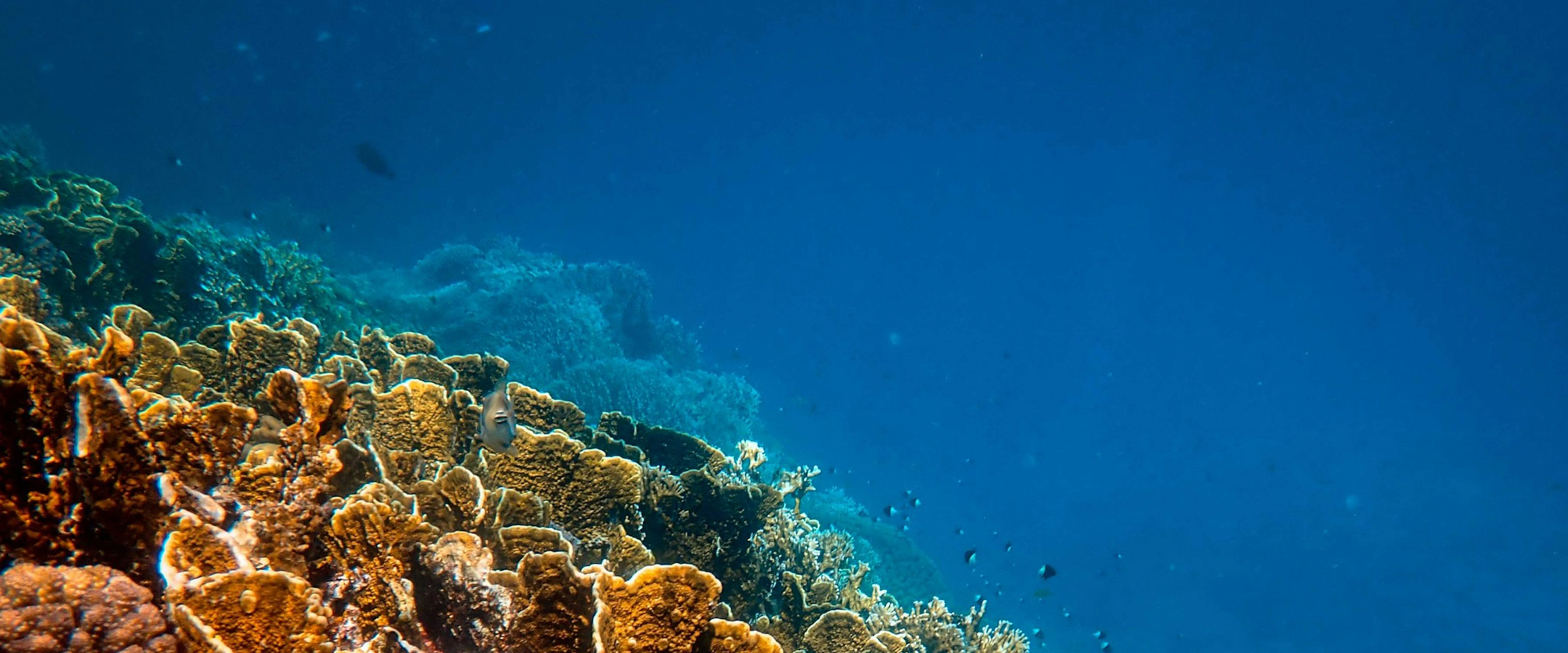
The camera performed exceptionally well, capturing stunning close-ups of corals, sponges, sea cucumbers, and even rare colonial organisms like siphonophores. The MxD’s advanced features include a global shutter sensor, BT.2020 color space, and a 2X tele-extender lens, which allowed scientists to zoom in on individual coral polyps and capture fine details critical for species identification.
Live Q&A with Aaron Steiner and Mikhail Rossoshanskiy
DeepSea recently expanded the “Multi” part of its HD Multi SeaCam product family with the introduction of four new lens options, providing both wider and more focused fields of view.
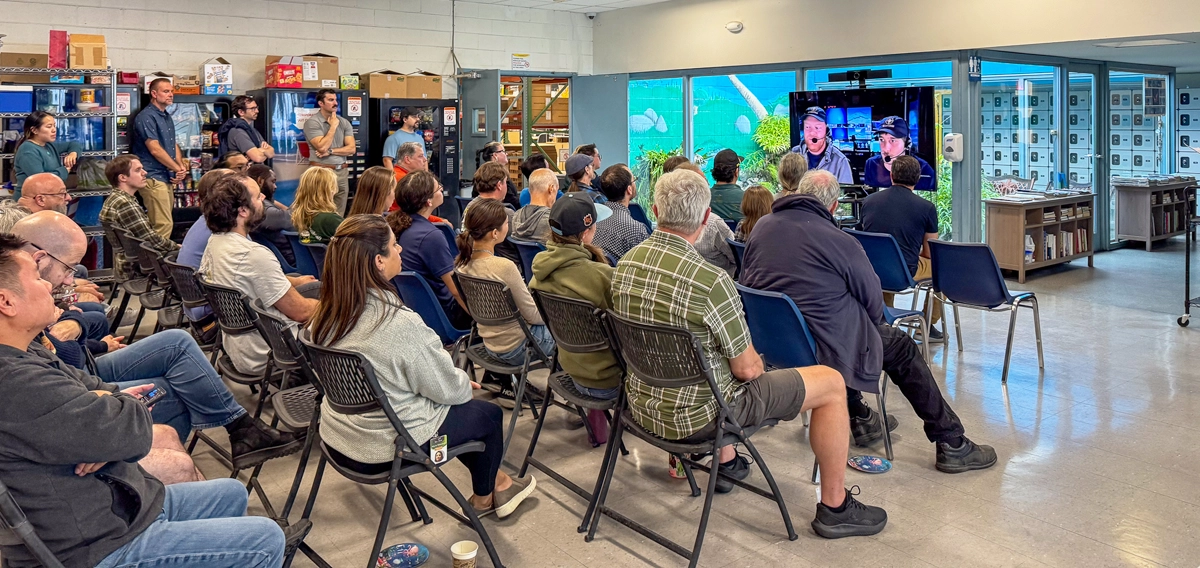
In October, General Manager Aaron Steiner and Engineer Mikhail Rossoshanskiy joined the company live from aboard the Nautilus through Nautilus Live’s “Ship to Shore” interaction platform. Here are some highlights from the Q&A:
Integration and Troubleshooting
The team faced initial power-up issues with the MxD on Little Hercules, requiring hands-on fixes and even building a custom circuit board at sea. “Nothing goes perfectly smoothly at sea,” Aaron noted, “but once we solved the integration hiccups, the system worked flawlessly.”
Imaging Performance
Mikhail explained how the MxD’s three-CMOS sensor block and HDR capabilities provide exceptional color fidelity and dynamic range. “We’re capturing about 78% of the human visual spectrum compared to 35% with standard HD cameras,” he said, emphasizing the importance of accurate color reproduction for subsea research.
Zoom and Detail
The camera’s tele-extender lens drew audible “wows” in the control van. “Being able to zoom in without moving the vehicle and still get crisp detail is a game-changer for species identification,” Aaron shared.
Community Reception
Feedback from the oceanographic community has been overwhelmingly positive. “Everybody on board is gaga for it,” Aaron said. Interest is already coming in from other research groups eager to learn more about the system’s capabilities.
Life at Sea
Aaron and Mikhail described 12-hour shifts, hands-on work with the ROV team, and even rebuilding tethers after unexpected fiber optic damage. “It’s almost a crime to call this work,” Aaron joked. “We’re having a blast.”
Why It Matters
The success of the MxD SeaCam trial demonstrates how advanced imaging technology can transform deep-ocean exploration. From documenting biodiversity to supporting habitat assessments, these capabilities help scientists answer critical questions about life in Earth’s most remote environments.
Catch expedition highlights and imagery on Nautilus Live here.
To learn more about the MxD SeaCam, contact our Sales team today