
Products
Lights
Lights
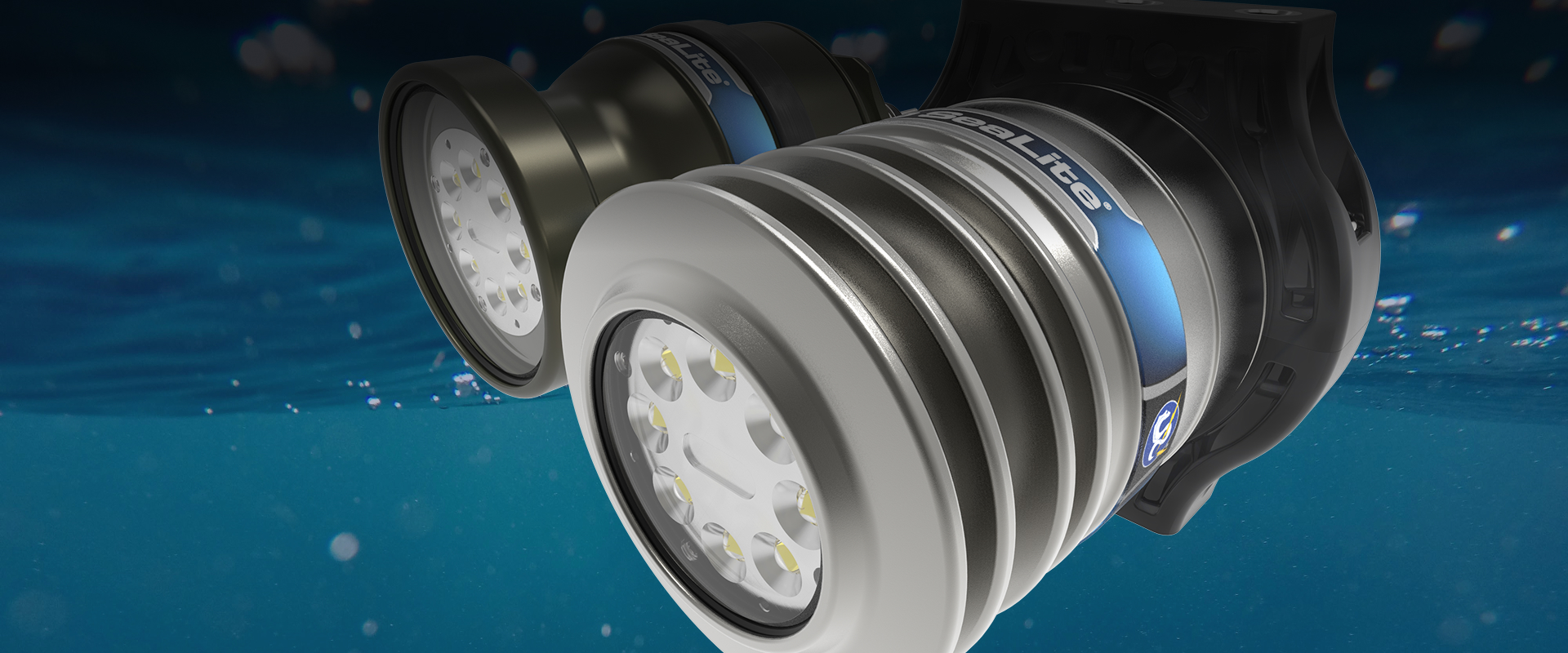
Used across industries—from ROVs and HOVs to aquariums and defense.
SeaLites® offer compact, durable, and economical light options and broad compatibility with subsea connectors.
lights
strobe option
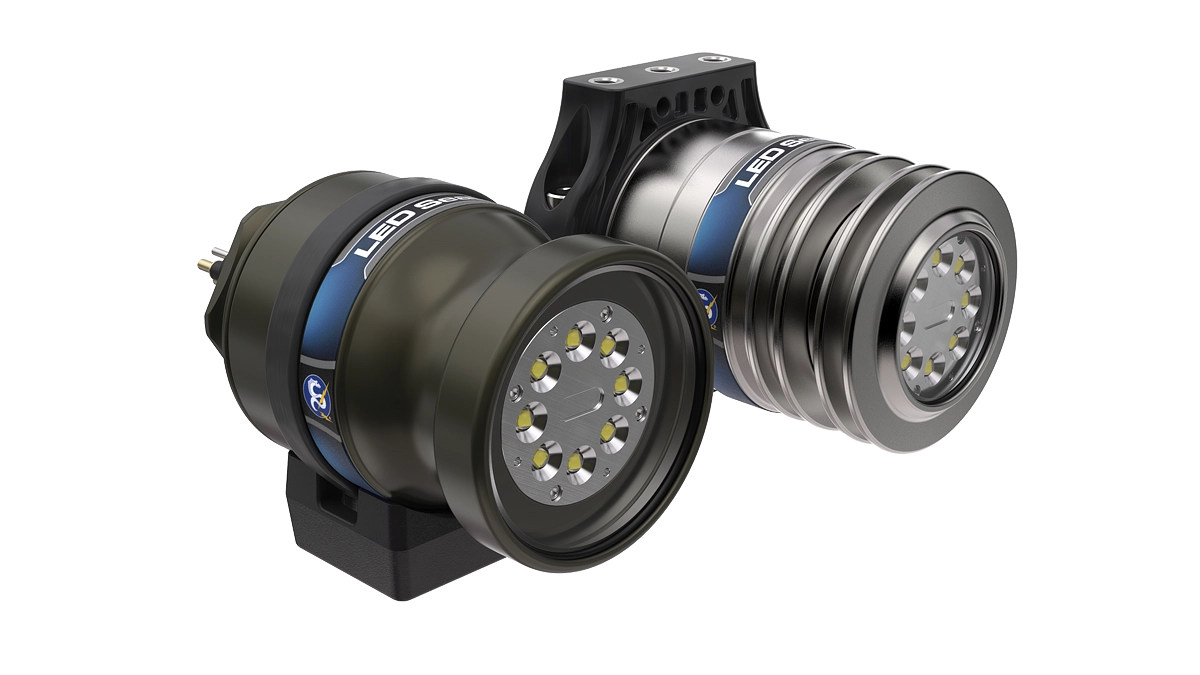
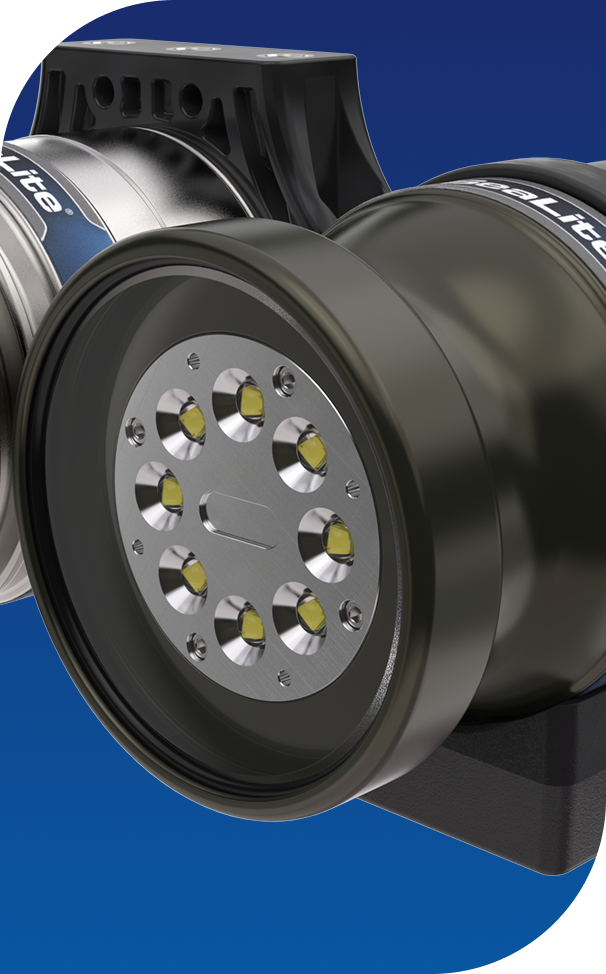
Modern, robust industry workhorse with broad configuration options for any application. Emits up to 10,000 lumens.
Highly configurable with strobe option available.
lights
10k lumens
configurable
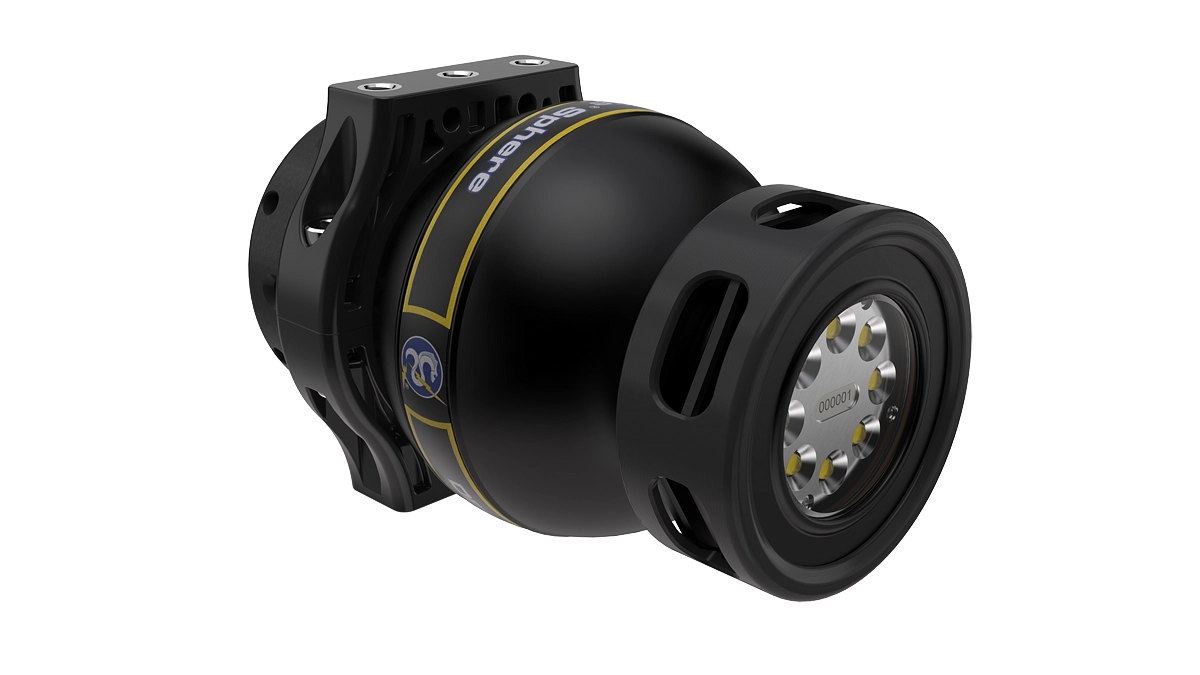
Versatile with configuration options, can be used in a wide variety of subsea applications. Emits up to 10,000 lumens.
lights
ultra-compact
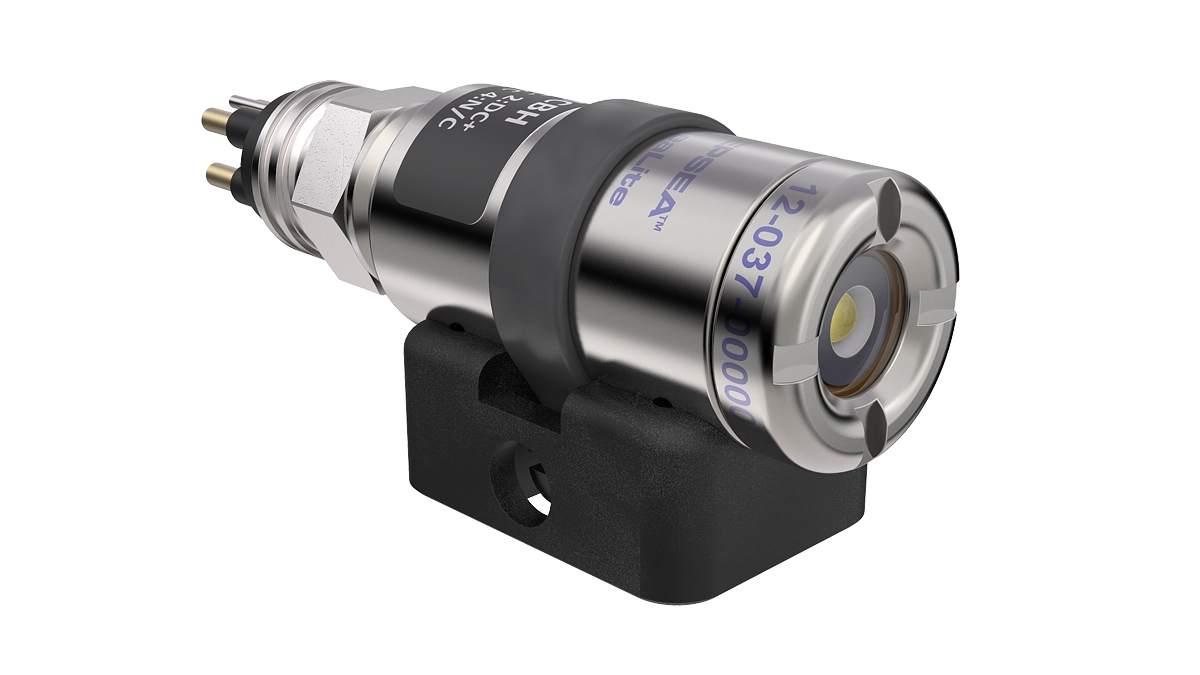
Ultra compact and lightweight, performs at up to full ocean depth with 700 lumens of typical light output.
Key Considerations for Lighting Selection
Lumen Output
General Illumination/Situational Awareness: The Nano SeaLite® offers 700 lumens in an ultra-compact design.
Inspection/Task Lighting: The LED SeaLite provides up to 10,000 lumens, while the SeaLite Sphere 200 Series offers up to 10,000 lumens.
High-Intensity / Wide Area Coverage: The Multiray™ LED SeaLite can deliver powerful, customizable illumination.
Beam Type (Spot vs. Flood)
Spot beams: Ideal for concentrated, long-distance visibility.
Flood beams: Best for wider area illumination and general viewing. DeepSea SeaLites offer various beam configurations.
Strobe Capabilities
The SeaStrobe LED SeaLite configuration offers strobe capabilities, which are ideal for still photography, machine vision applications, and more.
Color Temperature & Monochromatic Options
Cool white (5,000K-6,500K) is generally preferred for true-color visuals. DeepSea also offers monochromatic LEDs (UV, infrared, various colors) for specialized applications like leak detection or magnetic particle inspection.
Depth Rating
Ensure the light’s depth rating matches or exceeds your operational depth. DeepSea SeaLites are available with ratings up to 11,000m.
Dimming & Control
DeepSea SeaLites feature full dimming capabilities (digital and analog) for precise control, often with intelligent thermal rollback and monitoring data for optimal performance and longevity. Our SeaSense™ Protocol offers advanced control features.
Housing Material
For long-term immersion and corrosion resistance in harsh environments, select models are available with titanium housing.
White LED Emitters
Deepsea’s SeaLite® LED lights can be equipped with a wide range of emitters, including white, monochromatic, and beyond-visible-light options.
The most common option is Daylight White (5700K, 70CRI). This versatile light is suitable for almost any application, from oceanographic research and industrial projects to near-surface dry dock and diver work.
For enhanced color accuracy, we offer a High-CRI Daylight White (90CRI). This version is closer to natural sunlight, making it ideal for cinematography, research, and manned submersibles where an immersive visual experience is important.
Operators who prefer the warmer tone of traditional halogen, halide, or incandescent lights can choose our Warm White (3200K, 80CRI). Rich in reds, oranges, and yellows, this coloration is often favored for certain environmental conditions and by those familiar with this type of light.
Monochromatic & Beyond-Visible-Light Emitters
We also offer specialized monochromatic light sources for specific applications:
- Red light is often used for deep-sea observation because it is less noticeable to many marine animals.
- Green light can provide maximum penetration distance, making it optimal for use with black-and-white imagers.
- Color-triggered programming can be used by autonomous vehicles for subsea docking and other tasks.
- Ultraviolet (UV) light can be used to cause fluorescence in flora and fauna, and to work with leak-detection dyes.
SeaLite® Light FAQs
What is the primary difference between the LED SeaLite® and the SeaLite® Sphere?
The LED SeaLite® is our newest light, designed as a robust industry workhorse with outputs up to 10,000 lumens, offering highly configurable beam patterns (spot, flood) and Multiray™ technology (multiple colors/beams in one fixture). The SeaLite® Sphere, is an established compact, fully dimmable light designed to replace halogen bulbs. It features a unique spherical design that is chemically inert and operates both in water and in air (for limited periods), making it highly versatile for deck operations and ROV tooling.
What is Multiray™ technology, and which lights feature it?
Multiray™ technology allows a single lighting fixture to house two distinct sets of LED sources. This enables operators to switch between different colors (e.g., White and UV, or White and Red) or beam patterns without adding a second physical light to the vehicle. This feature is available on the Multiray LED SeaLite® series.
Are the lights serviceable in the field?
Yes, many DeepSea lights, such as the LED SeaLite®, are designed to be field-serviceable. They often utilize a design that requires no solder wire connections or specialized tools for basic maintenance, allowing for quick repairs or re-configurations on the vessel.
What are the standard depth ratings for DeepSea lights?
Most premium LED lights, including the LED SeaLite® and SeaLite® Sphere, come with a standard depth rating of 6,000 meters (using anodized aluminum or titanium housings). Options for 11,000 meters (full ocean depth) are available for specific models, requiring a titanium housing.
Can I dim the LED lights?
Yes, most DeepSea LED lights support wide-range dimming. Supported protocols typically include analog (0-5V, 0-10V, 4-20mA) and serial communication (RS-232, RS-485), as well as Phase/Triac control for specific models like the SeaLite® Sphere.
What is the typical power range of your lights?
DeepSea offers lighting solutions spanning from small, low-power lamps to very high-output lamps. In terms of brightness, the output ranges from a few hundred to many thousands of lumens. For example, the ultra-compact Nano SeaLite produces around 700 lumens of light, whereas the flagship LED SeaLite® (and SeaLite® Sphere series) can output up to 10,000 lumens to illuminate large areas. As for electrical power input, different models accommodate various supply ranges: some run on low-voltage DC (typically 10–48 VDC) and others accept AC mains voltages (around 90–140 VAC) depending on the model. This flexibility means there’s a light for almost any power source or brightness requirement – from small inspection-class ROVs to large deep-sea platforms.
Can I mix different beam angles in a LED SeaLite setup?
Yes, you can achieve mixed beam angles by using DeepSea’s MultiRay™ LED SeaLite® technology. The MultiRay LED SeaLite (model LSL-2025) actually combines two LED modules in one light, each with its own beam pattern and even color, which can operate independently or together. For instance, you could have a narrow-spot beam and a wide-flood beam in the same fixture and toggle each on or off. This effectively lets you “mix” beam angles in one compact setup – great for getting both distance penetration and broad illumination as needed. In multi-light setups, you could also simply use different SeaLite versions (e.g. one with a narrow beam lens and one with a wide beam) since the SeaLite family offers multiple beam angle options and LED configurations to tailor the lighting to your needs.
[Strobe Capabilities] Are your lights compatible with camera triggering or synchronization?
Yes, certain DeepSea lights – particularly our strobe and flashing models – can be synchronized with camera systems. The SeaStrobe LED SeaLite (LSL-2075) is a prime example: it’s designed to emit high-intensity pulses and includes a sync trigger input so that an external device (like a camera or controller) can trigger the flash at precise times. It supports edge-trigger and pulse-following modes for flexible synchronization, meaning you can coordinate each strobe flash with camera shutter events or other timing signals. Even our continuous lights can be remotely toggled or modulated via serial commands or analog control, which is useful if you want to programmatically turn lights on/off in sync with camera operation (for instance, dimming or extinguishing lights during certain camera frames). Overall, DeepSea’s lighting products integrate well with external trigger systems commonly used in underwater photography and machine vision.